
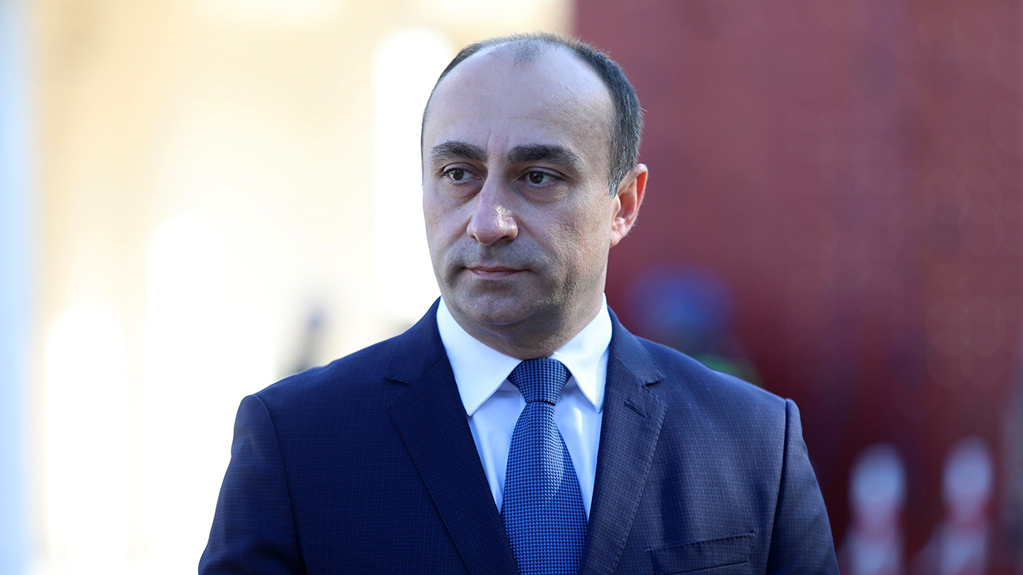
Georgian Dream Minister of Internal Affairs Gela (Geka) Geladze announced that the Ministry of Internal Affairs (MIA) has never purchased the so-called “camite” – a World War I-era chemical substance, which, according to the BBC journalistic investigation, was used at the end of 2024 to disperse anti-government demonstrations.
News
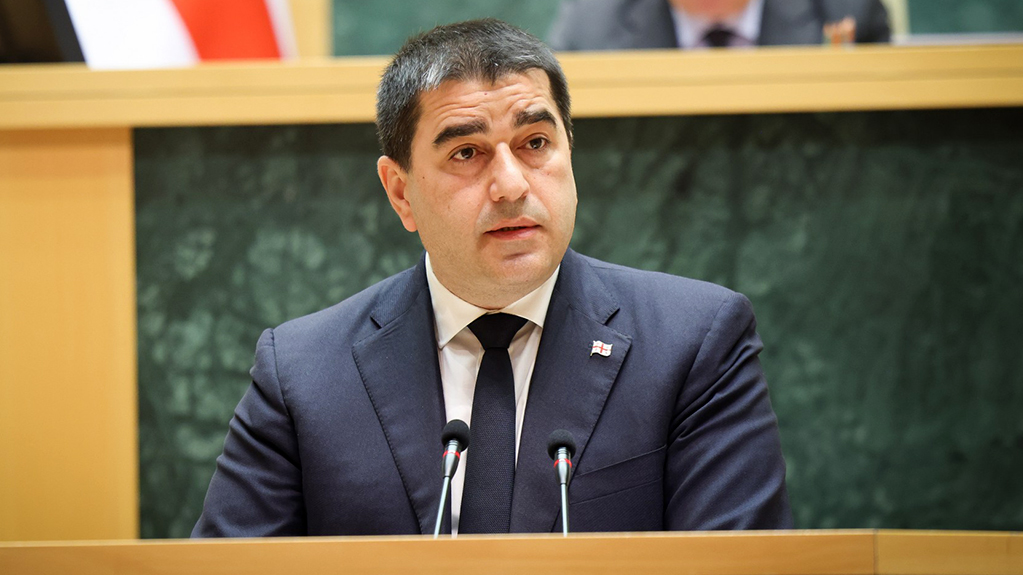
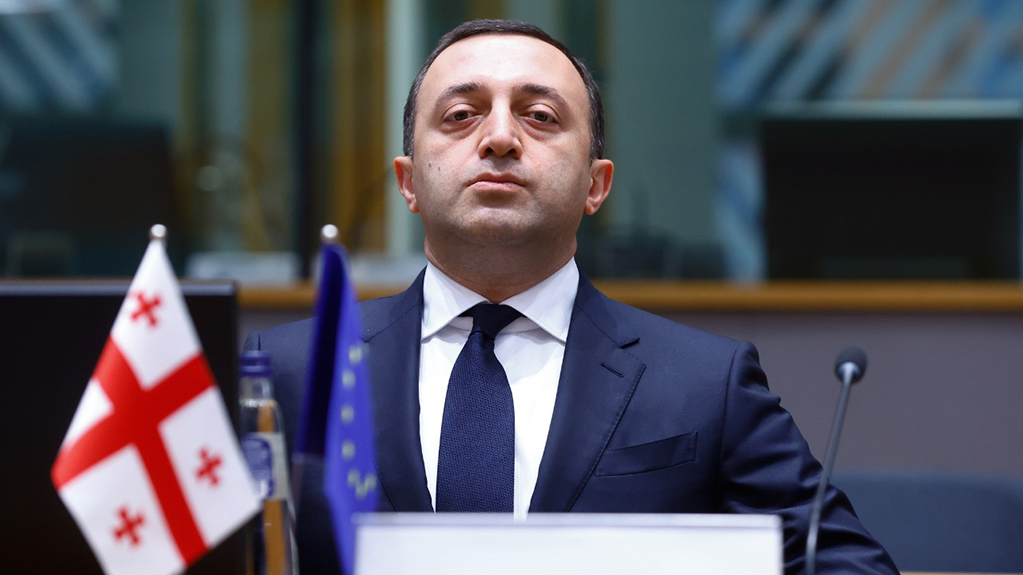

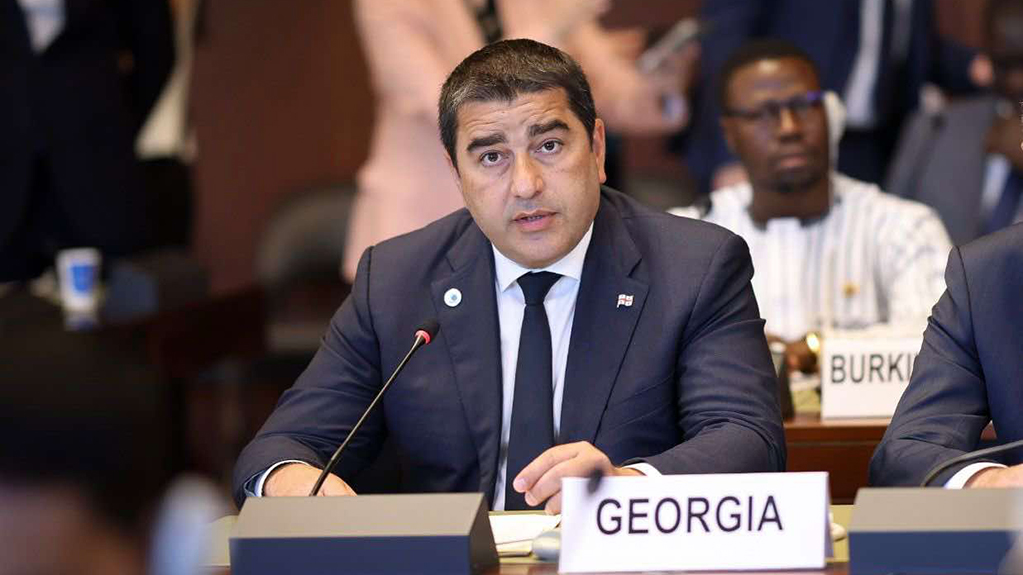

With this statement, Geladze rejected the claim of his predecessor, Vakhtang Gomelauri, that the substances named by the BBC, “the Ministry of Internal Affairs (MIA) indeed purchased and used, but only until 2012.”
“The accusation that the Ministry of Internal Affairs used prohibited substances, so-called “camite” against demonstrators, is entirely absurd, a lie, and does not correspond to the truth.
I personally reviewed all the documentation for every purchase in this regard, and we can confirm that the Ministry of Internal Affairs of Georgia has never purchased so-called “camite”.
The State Security Service has launched an investigation. Of course, all relevant expertise will be appointed, everyone will be interviewed, and the questions will be answered.
Mr Vakhtang was referring to the fact that different substances were purchased in 2009. You will be disappointed, but in these substances, there is no “camite.” We can hand over all these documents to the investigations and prove that in Georgia, this substance has never been purchased.
In 2009, several substances were purchased, different ones but not “camite”
During demonstrations, the Ministry of Internal Affairs did not engage in any substance use that was harmful to health. Every substance which was used during the dispersal was purchased legally from various large companies, which are authorised in all leading countries," Geladze stated to the media.
The Georgian Dream Minister of Internal Affairs did not respond to journalists’ questions about which substances were used during the dispersal of demonstrations.
The BBC gathered evidence suggesting that in 2024, the Georgian Dream party used WWI-era chemical weapons to disperse protests. The substance involved is bromobenzyl cyanide, which the French military called “camite.” This substance was deployed by France against Germany during World War I. There is little documentation of its subsequent use. It is believed to have been taken out of circulation sometime in the 1930s and replaced by CS (known as “tear gas”).
One participant in the demonstrations in Tbilisi told the BBC that the water cannon felt like the water was burning and that it was impossible to get rid of the sensation even after washing. Protesters also complained of other symptoms, including shortness of breath, coughing, and vomiting, which persisted for weeks.
The BBC managed to obtain a copy of the inventory of the Special Tasks Department, dated December 2019. Journalists discovered it contained two unnamed chemicals. These were listed as "Chemical liquid UN1710" and "Chemical powder UN3439", along with instructions for how they should be mixed.
UN1710 stands for trichloroethylene (TCE) - it allows other chemical compounds to dissolve in water.
“Trichloroethylene easily penetrates the skin, lungs, and gastrointestinal tract. It impacts the nervous and cardiovascular systems, and it can also affect the liver. It is certainly not a chemical to be thrown at masses during protests. It is all about the dose, which makes the poison and the higher the dose, the more risks for complications,” says Christopher Holstege, Chief of Division of Medical Toxicology at the University of Virginia.
UN3439 was much harder to identify since, as the BBC explains, it is an umbrella code for a whole range of industrial chemicals, all of which are hazardous. The only one of these that the BBC found to have ever been used as a riot-control agent is bromobenzyl cyanide.
“Based on the available evidence… the clinical findings reported by both those exposed and by other witnesses are consistent with bromobenzyl cyanide," said chemical weapons expert Christopher Holstege, and ruled out the likelihood of the symptoms being caused by more conventional crowd control measures, such as tear gas. He said the duration of the symptoms was not consistent with the effects of tear gas. Christopher Holstege suggested that bromobenzyl cyanide might have been used because it is a strong deterrent: “It would keep people away for a long time. They couldn’t decontaminate [themselves]. They would have to go to the hospital. They would have to leave the area. If that is indeed the case - that this chemical has been brought back - that is actually exceedingly dangerous, “
Georgian Dream called the BBC a “propaganda tool of the deep state” and threatened to sue in international courts. The party stated that the published material is “a torrent of lies” and represents an attempt to “tarnish the Georgian government, the Georgian police, and most importantly, the Georgian statehood”.
In connection with the journalistic material, the State Security Service launched an investigation under Articles 333 and 319 of the Criminal Code, which concern abuse of official authority and assisting a foreign organisation in hostile activities.