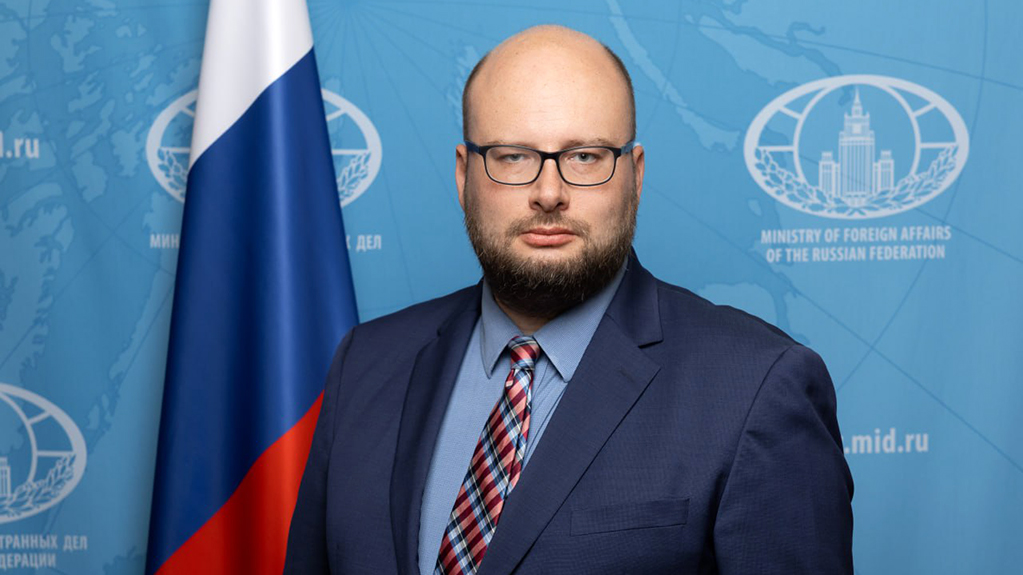
“Russia is serious about normalising relations with Georgia. The main thing is that Georgia does not become a ‘bargaining chip’ in anti-Russian games,” said Mikhail Kalugin, Director of the Fourth CIS Department of the Russian Ministry of Foreign Affairs.
News
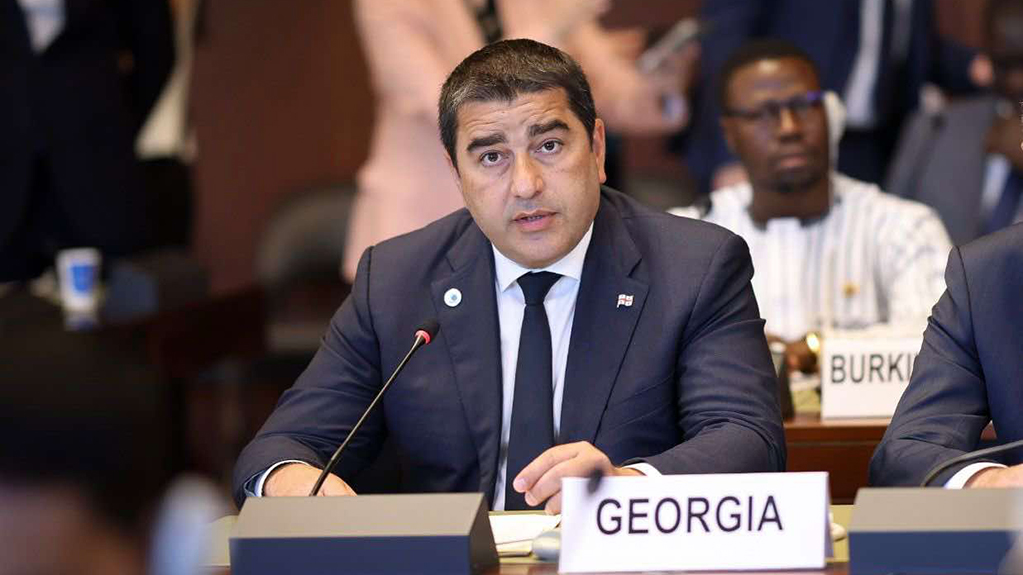

In an interview with state-run propaganda media, Kalugin commented on relations between Russia and Georgia.
“We strive for stable relations with Georgia. Tbilisi demonstrates healthy pragmatism and a multi-vector approach to foreign affairs. Georgia did not join the anti-Russian sanctions coalition and rejected the reckless idea of opening a ‘second front’ against Russia, which was being imposed from outside. Thanks to this, we have achieved a lot in the economy over the past few years,” Kalugin said.
The Russian diplomat noted that the two countries do not have diplomatic relations, although “there are active ties that provide tangible benefits”
“Trade turnover in 2024 reached $2.4 billion and continues to grow. Our large market is practically indispensable for Georgia's key export goods.
Russia leads in the number of tourists visiting Georgia. If this figure was 200,000 in 2021, by 2024, it had already exceeded 1.4 million. In 2025, Russians account for nearly a quarter of the tourist flow in Georgia.
Two years ago, we restored direct flights to Georgia. I believe there is potential to increase cooperation in the transport sector by removing barriers and expanding transit opportunities. The mutual benefits here are clear.”
“If the Georgian government had chosen a path of confrontation with us in 2022 to please the Westerners, none of this positive change would have occurred, and Georgia's economy would not have grown by 40%,” said Mikhail Kalugin.
When asked by RIA Novosti how the disagreement between Tbilisi and Brussels affects the prospects for restoring diplomatic relations, Kalugin responded:
“From an economic perspective, it appears that the European Union has also failed to meet the expectations of Georgians. Despite signing the Association and Free Trade Agreement with the EU in 2014, few Georgian goods reach the EU market. The plain statistics speak volumes. The CIS accounts for 33% of Georgia’s trade, whereas the EU makes up only 22%. Regarding Georgia’s exports, the difference between the CIS and EU shares is simply colossal: in 2024, Georgia exported 70% of its goods to the CIS, but only 9% to the EU. It is evident which market is accessible to Georgia and which remains closed.”
In the same interview, Mikhail Kalugin stated that the West is trying to create a rift in relations between the South Caucasus countries and Russia.
“Russia is not just a neighbour of the South Caucasus. Russia itself is a Caucasian state (держава). We are united with the people living on the southern side of the mountain range by centuries-old friendship, glorious chapters of shared history, civilizational closeness, and millions of family and kinship ties. For a long time, we lived within a part of a single state. At one time, rapprochement with Russia allowed the peoples of the region to maintain their own identity. The state foundations of the South Caucasus republics were formed during the Soviet era. I am sure that our unique relationship is not affected by time and external pressure,” said a senior official of the Russian Foreign Ministry.