
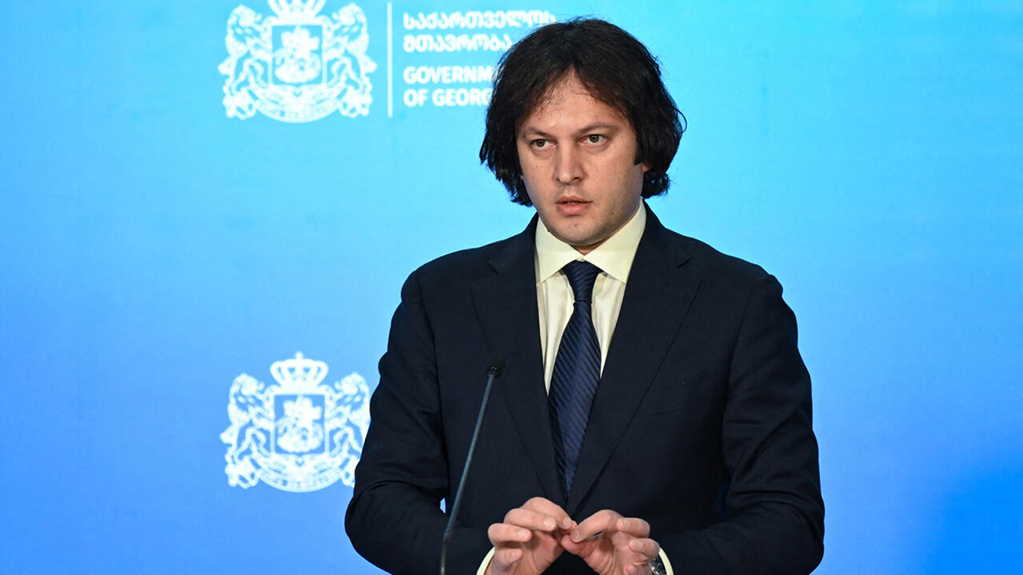
“Since there is nothing further to clarify or investigate about the use of the so-called “camite” and other banned substances, all investigative actions on this matter have been completed, and the case is now closed,” said Irakli Kobakhidze, the Georgian Dream Prime Minister.
News

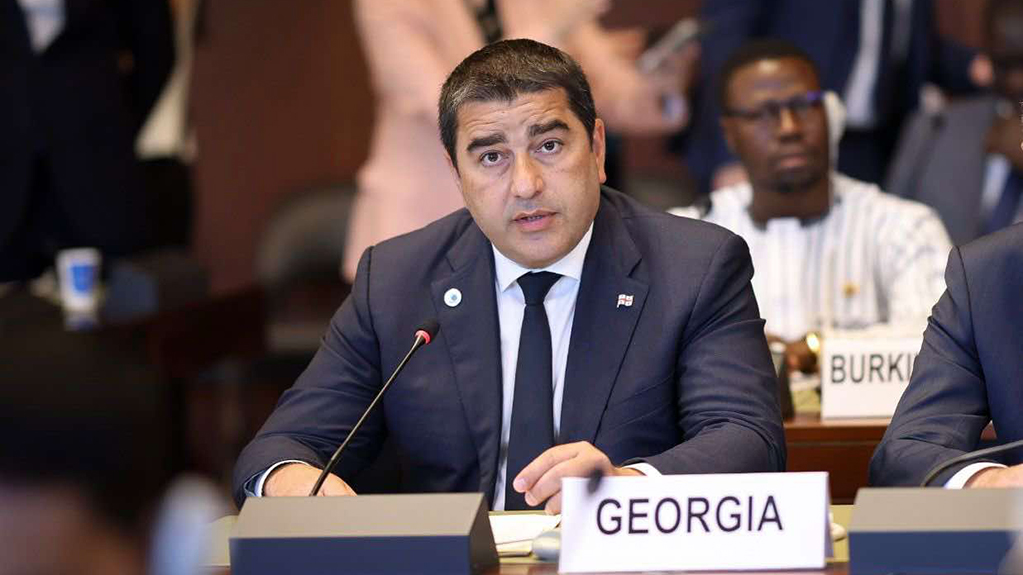

Kobakhidze claimed that “the investigation has unequivocally proven” that the Ministry of Internal Affairs did not use “camite” or any other prohibited substances when dispersing violent demonstrators last year.
“Regarding the most significant part of the ongoing investigation, which is assistance by specific individuals to a foreign organisation in hostile activities, intensive investigative actions in this area will continue.”
“All individuals or groups against whom sufficient evidence is gathered, confirming that they deliberately harmed Georgia’s national interests, international image, and reputation and whose actions were aimed at undermining the interests of the Georgian state, will be punished to the full severity of the law,” Kobakhidze threatened.
According to the GD Prime Minister, “the public has observed a pre-arranged campaign against Georgia by foreign special services over the past five days. “
“In this anti-Georgian campaign, odious entities well-known to the public, both within the country and abroad, actively participated. Within the country, the usual suspects were actively involved in this campaign: foreign agents, including radical parties, radical media outlets, radical NGOs, and radical political activists.”
“The report prepared by the British broadcaster was based entirely on false assumptions and fabricated stories. It became an artificial pretext for politically engaged groups to wage a new, hybrid war against Georgia and the Georgian people,” Kobakhidze said.
The Georgian Dream’s State Security Service (SSSG) announced today that its investigation into the potential use of bromobenzyl cyanide (“camite”) to disperse anti-government demonstrations in November–December 2024, which began five days ago, has now concluded.
Lasha Maghradze, the First Deputy Head of the State Security Service, stated that on December 4-5, 2024, “chlorobenzylidene malononitrile” and its solvent “propylene glycol” were used during the protests, and neither of them is a prohibited substance.
Chlorobenzylidenemalononitrile is known as CS gas, or tear gas.
Lasha Maghradze claimed that the Ministry of Internal Affairs never purchased “camite.” However, he did not specify what substances were used on other days of the protests beginning on November 28, 2024.
“When Water Burns: The Fight for Georgia” - The BBC World Service released a journalistic investigation with this title on November 30. The journalists obtained evidence indicating that the Georgian Dream government mixed a prohibited chemical substance into water cannons used against its own citizens.
The BBC managed to obtain a copy of the inventory from the Special Tasks Department, dated December 2019. Journalists found that it listed two unnamed chemicals, labelled “Chemical liquid UN1710” and “Chemical powder UN3439,” along with instructions for mixing.
UN1710 stands for trichloroethylene (TCE). The agent allows other chemical compounds to dissolve in water.
“Trichloroethylene easily penetrates the skin, lungs, and gastrointestinal tract. It impacts the nervous and cardiovascular systems, and it can also affect the liver. It is certainly not a chemical to be thrown at masses during protests. It is all about the dose, which makes the poison and the higher the dose, the more risks for complications,” says Christopher Holstege, Chief of Division of Medical Toxicology at the University of Virginia.
UN3439 was much harder to identify since, as the BBC explains, it is an umbrella code for a whole range of industrial chemicals, all of which are hazardous. The only one of these that the BBC found to have ever been used as a riot-control agent is bromobenzyl cyanide, also known as “camite.” The substance was first used by French forces in World War I and was soon withdrawn due to the long-lasting effects of exposure.
The State Security Service stated that the Ministry of Internal Affairs purchased chlorobenzylidene malononitrile and the solvent trichloroethylene in 2007 and 2009, using the codes UN1710 and UN3439 referenced in the BBC report. As part of the investigation, trichloroethylene was also seized from the Ministry of Internal Affairs. According to the SSSG, this involved 880 litres of written-off balance (remains).