The European Union Delegation to Georgia has published an excerpt from the conclusions of the Danish Presidency of the Council of the European Union on enlargement, which also concern Georgia.
News

It is noteworthy that, due to Hungary's veto, the Council of the European Union was unable to approve the enlargement conclusions, and the document was published as “Presidency Conclusions on Enlargement.”
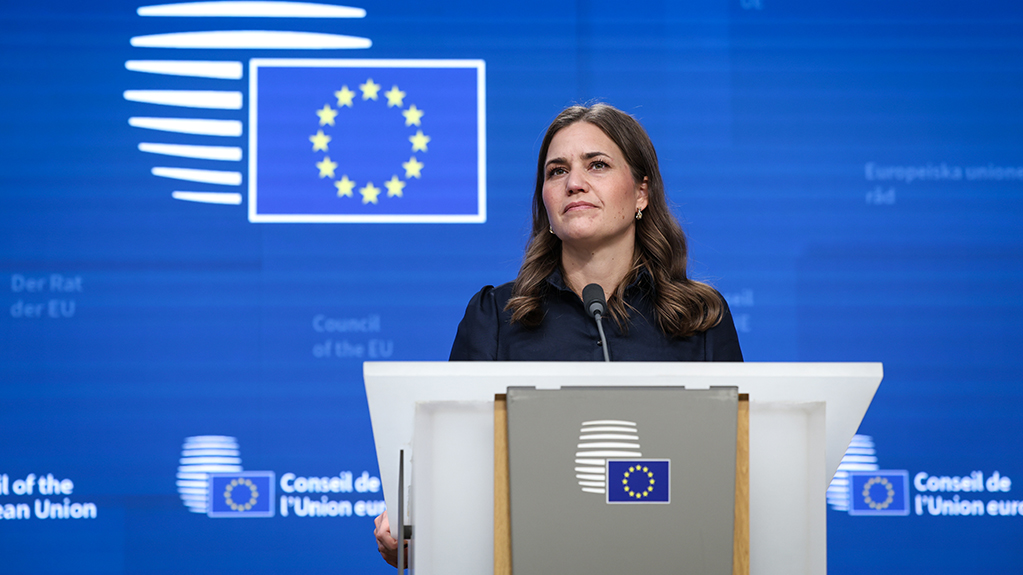
“We tried to reach the Council conclusions, but unfortunately, this was not possible. Hungary is blocking us from reaching the Council conclusions. Our attempts to find a solution have been rejected, and I very much regret this,” Marie Bjerre, Denmark's Minister for European Affairs, stated at the press conference following an inconclusive General Affairs Council on 16 December.
The Council of European Union Presidency Conclusions on Enlargement outline the following regarding Georgia:
- The Council reaffirms the Union’s support for the aspirations of the vast majority of Georgian people for a European future, and actions taken by the Georgian authorities fall short of the EU’s expectations of a candidate country.
- The Council notes the serious general backsliding in democracy, human rights and rule of law, including the adoption of repressive legislation undermining fundamental rights and freedoms, the political instrumentalisation of the judiciary, the persecution of opposition leaders, arbitrary arrests of protesters and journalists and a shrinking civic space.
- The Council condemns and calls for an end to disinformation and anti-EU narratives spread by the Georgian authorities.
- The Council notes with regret Georgia’s backsliding across the nine steps on which the candidate status was granted. Therefore, Georgia’s EU accession process has effectively come to a standstill until the authorities demonstrate resolute commitment to reverse course and return to the EU accession path.
- The Council calls on the Georgian authorities to free all arbitrarily detained politicians, journalists and activists, to repeal repressive legislation, adopt democratic, comprehensive and sustainable reforms, in line with the core principles of European integration, and cease its aggressive narrative against the EU, the EU Ambassadors and Head of Delegation as first steps towards re-engagement on the EU path.
- The Council reaffirms the EU’s support to Georgia’s sovereignty, independence and territorial integrity within its internationally recognised borders and underlines that the EU remains firmly committed to peaceful conflict resolution and its policy of non-recognition and engagement, including through the presence of the EU Monitoring Mission in Georgia.
- The Council reiterates its strong expectation of Georgia to step up its efforts towards full CFSP alignment, notably by aligning with EU restrictive measures against Russia and Belarus taken in the context of Russia’s war of aggression against Ukraine, as a matter of the utmost priority.
- The Council also calls on the Georgian authorities to refrain from actions and statements that run counter to EU positions on foreign policy. The Council encourages Georgia to continue its cooperation on preventing the circumvention of EU restrictive measures.
The published document is supported by the governments of 26 out of the 27 European Union member states.